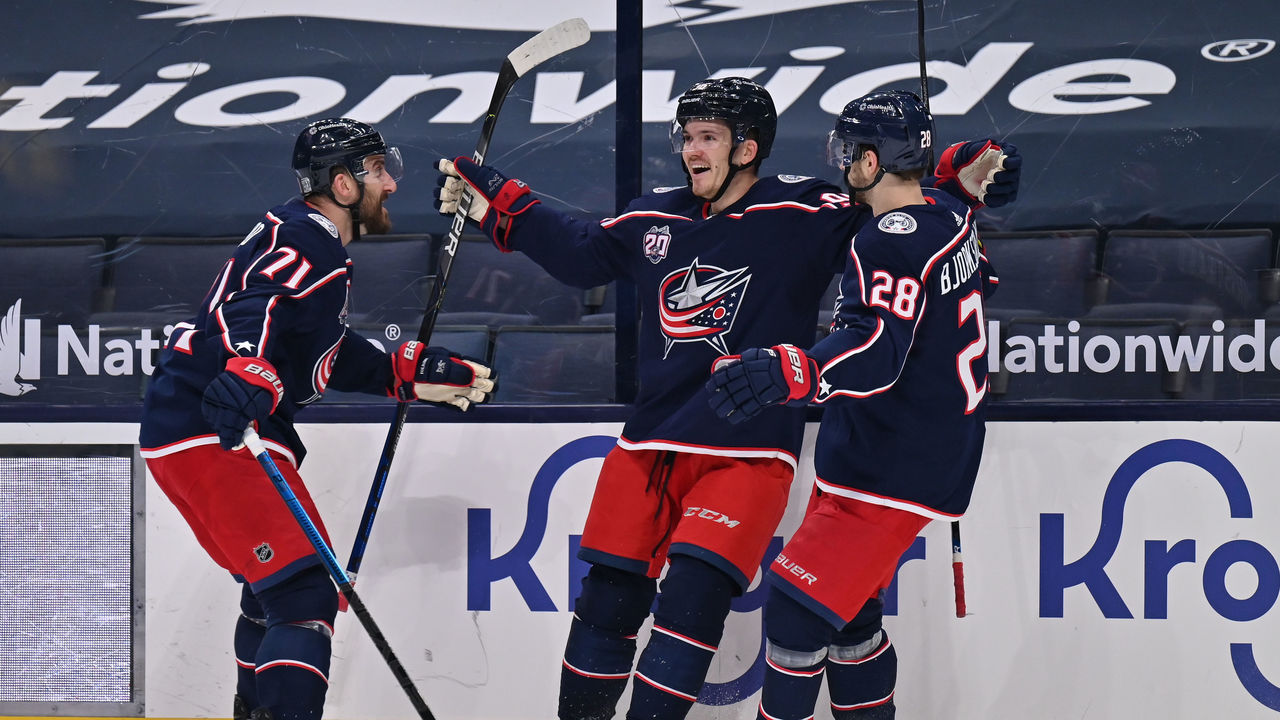
In the second edition of theScore's 2021 Calder Trophy Power Rankings, we feature three rookies new to the list, including one of last year's high-profile draftees.
Although postponements and small sample sizes have skewed some of the numbers, these five freshmen are worthy of recognition.
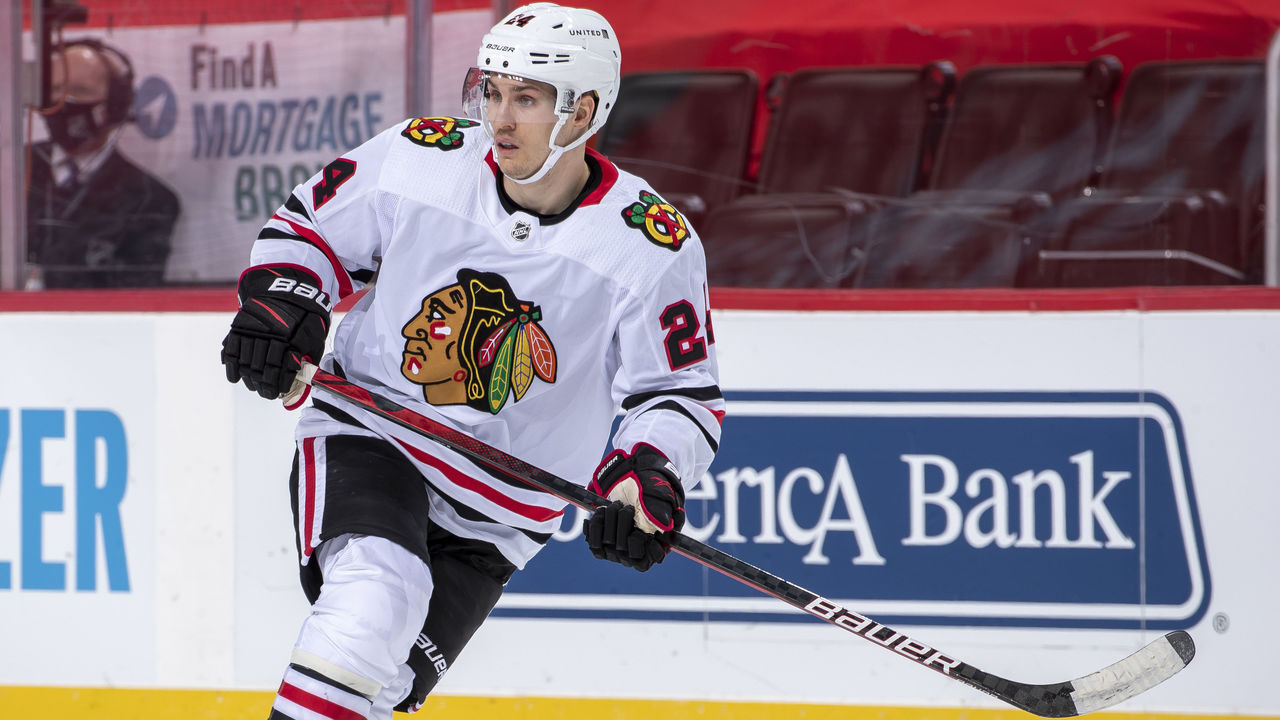
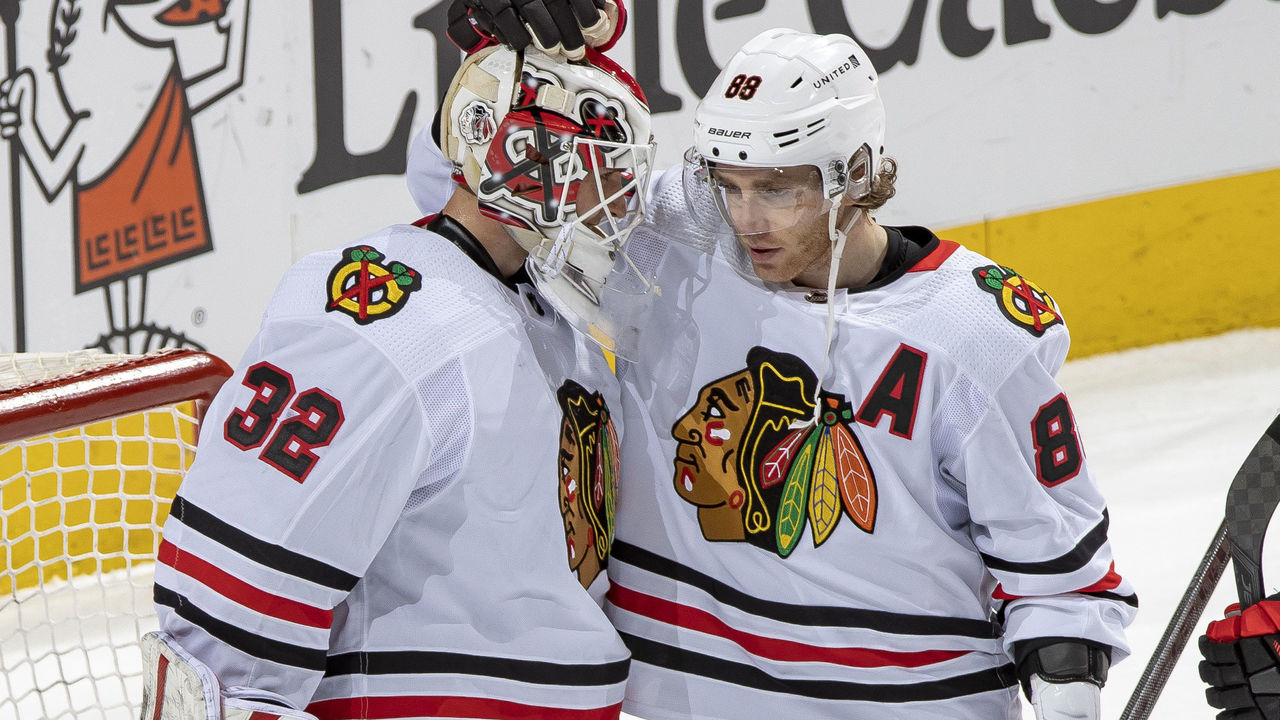
5. Pius Suter, Chicago Blackhawks
Dave Reginek / National Hockey League / Getty
GP
P
ATOI
xGF%
19
10
15:43
48.12
Suter has filled in admirably on the Blackhawks' top line after Jonathan Toews and Kirby Dach suffered injuries. The 24-year-old leads all rookies in goals (six) and ranks third in points. Suter's done the majority of his damage at even strength, too. He's already exceeded expectations as an unheralded signing out of Switzerland.
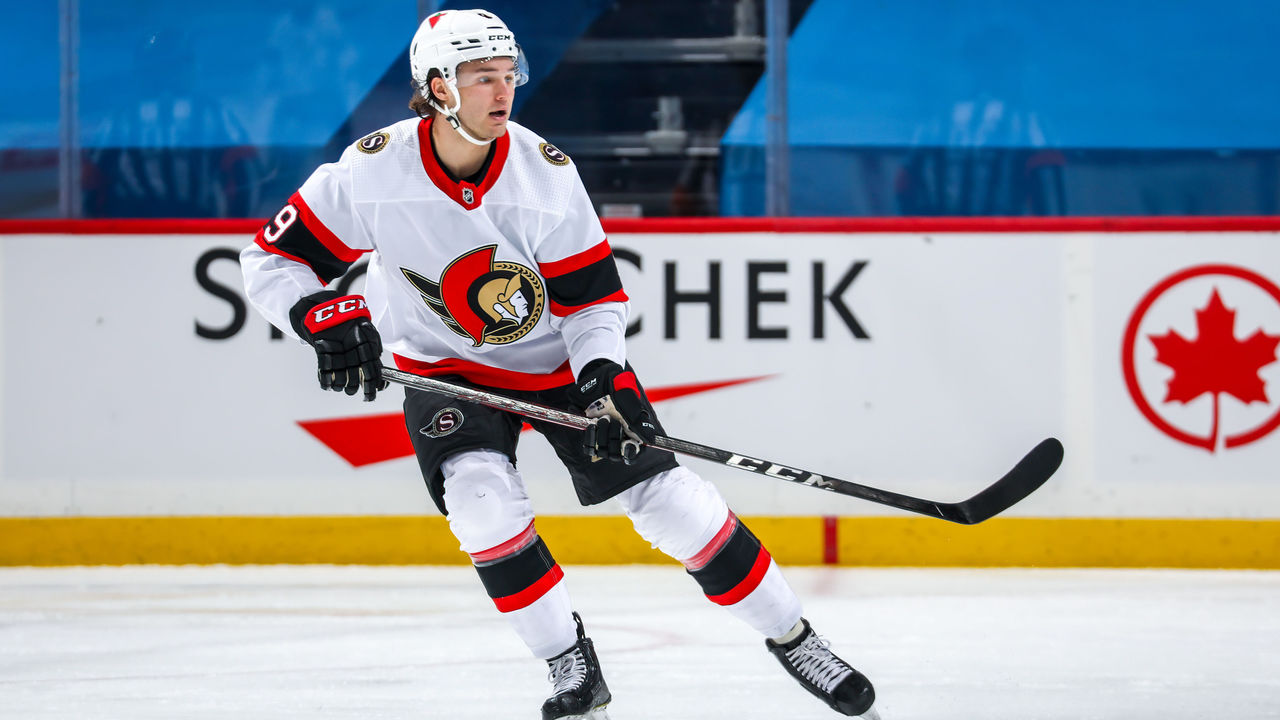
4. Josh Norris, Ottawa Senators
Jonathan Kozub / National Hockey League / Getty
GP
P
ATOI
xGF%
20
11
15:30
58.44
Norris has been a real bright spot in what's been a difficult season for the Senators. The 21-year-old pivot ranks second on the team in scoring and second among all rookies, though he's played more games than most of his peers. However, Norris' underlying numbers are perhaps the most impressive aspect of his debut campaign. His expected goal stats shine relative to his teammates, which is a great sign for a club in desperate need of depth down the middle of the ice.
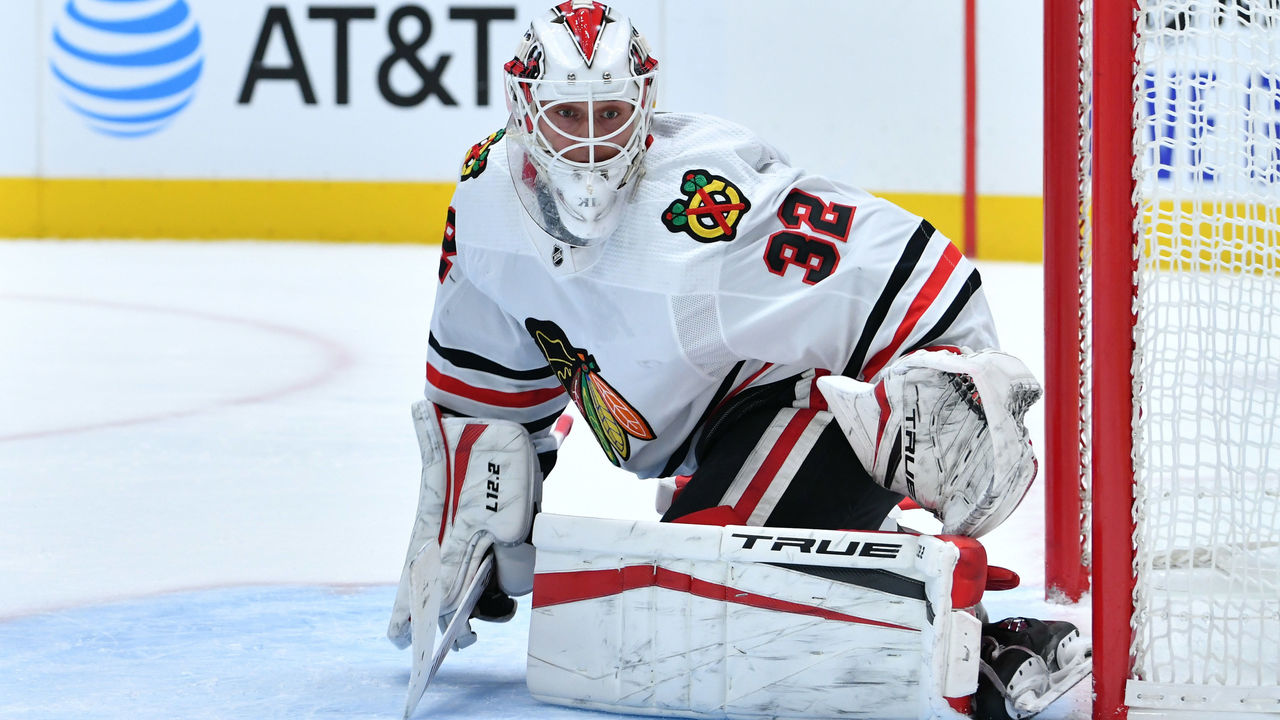
3. Kevin Lankinen, Chicago Blackhawks
Glenn James / National Hockey League / Getty
GP
W
Sv%
GAA
13
7
.927
2.42
Lankinen has come out of left field to change the entire outlook of the Blackhawks' season. Chicago was widely considered to be a lottery team thanks to injuries and uncertainty in goal, but the undrafted 25-year-old has thrust the club into playoff contention. Lankinen's save percentage through 13 games ranks fifth in the league, and he's tied for the lead among all goalies with nine goals saved above average.
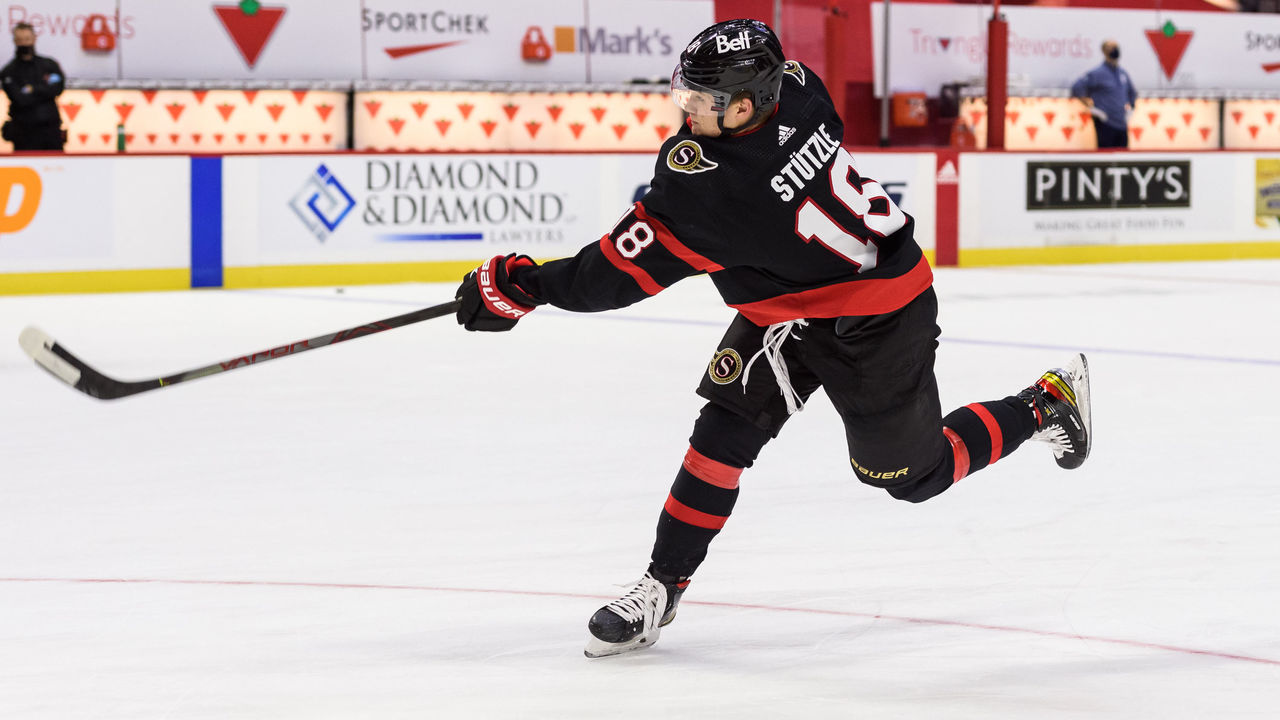
2. Tim Stutzle, Ottawa Senators
Icon Sportswire / Icon Sportswire / Getty
GP
P
ATOI
xGF%
17
9
15:35
40.21
Stutzle has made a charge up our rankings after missing the cut last month as he's more consistently showcasing his scintillating skill set. The 2020 third overall pick leads all rookies with seven points in February and appears to be getting more comfortable with life in the NHL. Stutzle is emerging as a stronger scoring threat with each passing game; he'll only see his point total climb as he's awarded more responsibility.
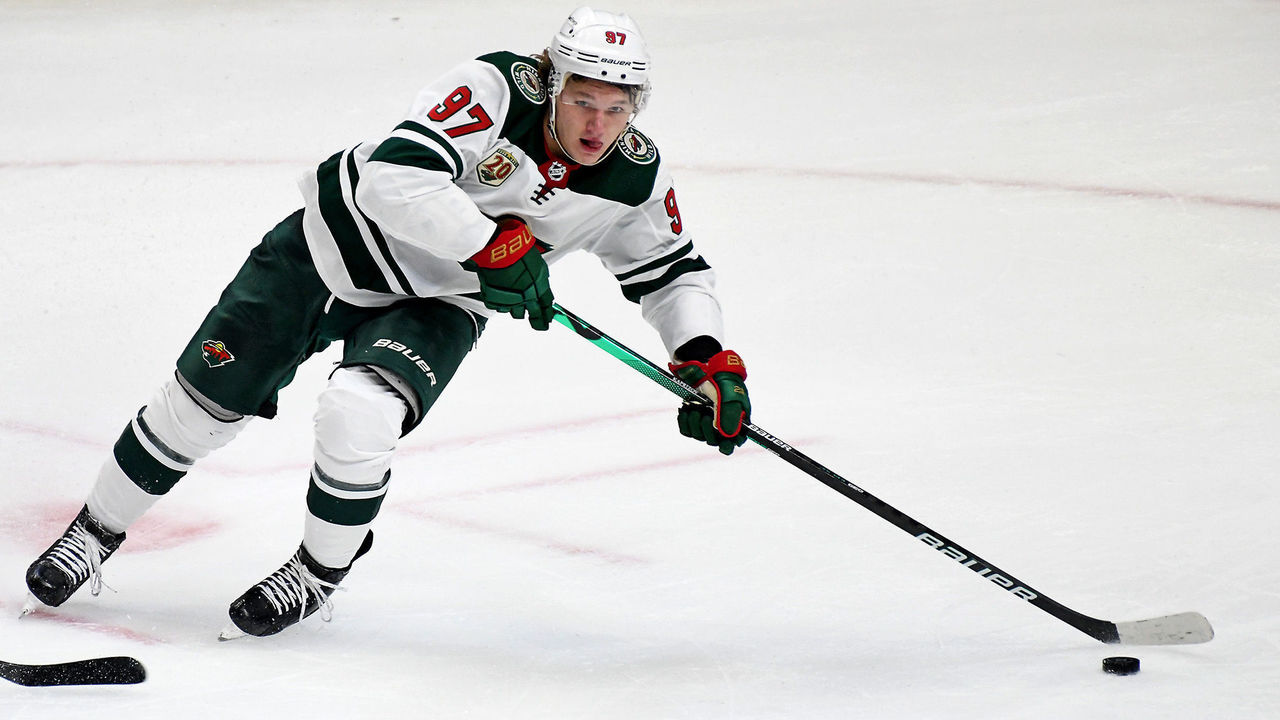
1. Kirill Kaprizov, Minnesota Wild
Icon Sportswire / Icon Sportswire / Getty
GP
P
ATOI
xGF%
15
13
18:11
48.3
The Wild have played only five games in February due to a COVID-19 outbreak, yet Kaprizov leads all rookies in scoring. The Russian winger also tops Minnesota in points, and he leads all first-year forwards in ice time. Not only has Kaprizov met expectations in his inaugural season on North American soil, but he's also proved to be the most dynamic first-year player in 2021 by a significant margin.
David Ayres' miraculous victory as an emergency backup goaltender with the Carolina Hurricanes last year is being made into a movie with the help of Disney.
The 43-year-old said comedian James Corden called him shortly after the win to discuss making a movie about it, according to Sportsnet's Luke Fox. Ayres then connected Creative Artists Agency, and at least 24 different production companies apparently expressed interest in the idea.
"(CAA) said to me, 'You wouldn't believe the amount of production companies that have come to us already asking to do this film. It's insane,'" Ayres said. "They narrowed it down to 24 at one point, and then we narrowed it down to 12. We listened to 12 pitches from all the different people."
He added: "That's how the whole Disney thing came about. So, we'll see what happens. A little slow now with COVID, but once we get the ball rolling, it'll be fine. Once we start writing it, I think they'll go two years from there."
Ayres said he was told he'll be a producer and help with writing the script.
On Feb. 22, 2020, Ayres was called into action against the Toronto Maple Leafs after both of the Hurricanes' goalies went down with injuries. He was a Zamboni driver for the AHL's Toronto Marlies at the time and helped backstop Carolina to a 6-3 victory in front of Toronto's home crowd.
When reflecting on the moment a year later, Ayres shared his biggest takeaway from the experience.
"It just lets you know, anything you try in life, you can achieve it," Ayres said. "You put a lot of hard work and get a couple lucky bounces here and there, and things will go your way - as long as you stay positive."
The Buffalo Sabres defenseman will likely be out six-to-eight months after hurting the ACL, MCL, and meniscus in his right knee during a win over the New Jersey Devils on Saturday, the Sabres announced Monday.
New York Rangers star Artemi Panarin will be away from the club indefinitely in the wake of a "fabricated story" against him from Russia, the team announced Monday.
In the piece, there's a claim that Panarin "beat up" an 18-year-old girl in a Russian bar in 2011, according to the New York Post's Larry Brooks.
"Artemi vehemently and unequivocally denies any and all allegations in this fabricated story," the Rangers said in a statement. "This is clearly an intimidation tactic being used against him for being outspoken on recent political events.
"Artemi is obviously shaken and concerned and will take some time away from the team. The Rangers fully support Artemi and will work with him to identify the source of these unfounded allegations."
Panarin has publicly criticized the Russian government and President Vladimir Putin. In January, the 29-year-old showed his support for opposition leader Alexei Navalny with a post captioned "freedom for Navalny" in Russian.
The 5-foot-11 winger ranked third in league scoring with 95 points over 69 games last season, finishing third in Hart Trophy voting.
Panarin has tallied five goals and a team-best 18 points over 14 contests this campaign.
This is the fourth edition of theScore's NHL Power Rankings for the 2020-21 season. Check back for updated rankings every second Monday during the regular season.
In this edition, we examine the biggest surprise for each team thus far.
1. Toronto Maple Leafs (14-3-2)
Previous rank: 4th
The Leafs have been carried by a dominant attack for the entirety of the Auston Matthews era, and while Toronto's offense is still quite potent, ranking top-10 in shots against per game is a significant shake-up.
2. Carolina Hurricanes (12-3-1)
Gregg Forwerck / National Hockey League / Getty
Previous rank: 8th
After scoring 31 goals and 75 points in 2017-18, Vincent Trocheck seems to have finally regained his scoring touch with the Hurricanes. He's currently tied for both the team-lead in goals (9) and points (16) and his 82-game pace has him on track to have the best season of his career.
3. Colorado Avalanche (9-4-1)
Previous rank: 6th
Goaltending was considered the Avalanche's weakness entering the season, but Philipp Grubauer has silenced the critics. He's posted a .936 save percentage and a 1.67 goals-against average while starting all but two of Colorado's games with backup Pavel Francouz sidelined.
4. Tampa Bay Lightning (10-4-1)
Previous rank: 1st
The defending champs have suffered injuries to numerous key forwards this season, but Mikhail Sergachev emerging as an offensive contributor is a notable surprise. The 22-year-old defenseman ranks fifth on the club in scoring and currently boasts a career-best 0.73 points per game.
5. Boston Bruins (11-3-2)
Previous rank: 3rd
Despite losing defensemen Torey Krug and Zdeno Chara, the Bruins remarkably entered Sunday as the league's best shot-suppressing team at five-on-five.
6. Florida Panthers (11-3-2)
Previous rank: 7th
Carter Verhaeghe's hot start is one of the most surprising in the NHL. The 25-year-old entered the campaign with only 52 career regular-season games under his belt - most of which were spent on the Lightning's fourth line. He's now tallied seven goals and six assists in 16 games while riding shotgun on the top line with Aleksander Barkov. Not bad for a two-year, $2-million UFA signing.
7. Vegas Golden Knights (10-4-1)
Jeff Bottari / National Hockey League / Getty
Previous rank: 2nd
Everybody pegged Robin Lehner as the Golden Knights' new No. 1 netminder, but Marc-Andre Fleury turning back the clock and posting a .935 save percentage through 10 starts is the unexpected story of the season thus far in Sin City.
8. Edmonton Oilers (12-8-0)
Previous rank: 23rd
It appears Darnell Nurse may have finally blossomed into the bonafide No. 1 defenseman the Oilers have been hoping for. He's tied for the lead among all defensemen in goals (6), tied for second in points (16), ranks sixth in time on ice (25:30), and fifth in hits (52).
9. St. Louis Blues (10-6-2)
Previous rank: 13th
Jordan Kyrou has established himself as a key player for the Blues this season, ranking second on a team full of veteran stars with 17 points in 18 games despite averaging under 15 minutes per contest.
10. Winnipeg Jets (11-6-1)
Previous rank: 9th
Andrew Copp was predominately used as a bottom-six checking winger during his first five NHL seasons, but he's performed well with top-line minutes, driving play at a high rate and chipping in offensively.
11. Montreal Canadiens (9-5-3)
Previous rank: 5th
Many thought Jake Allen would provide Carey Price some breathing room to flourish in the crease, but the backup netminder has actually heavily outplayed the former Hart Trophy winner thus far. Allen's .932 save percentage and 2.14 goals-against average in seven games is dazzling compared to Price's .893 save percentage and 2.87 goals-against average.
12. Philadelphia Flyers (8-4-3)
Previous rank: 10th
Travis Konecny looked like a star in the making with a breakout 2019-20 campaign, but the Flyers' feisty winger has slumped to the tune of just eight points in 12 games so far. He's been held off the scoresheet in seven contests and was a surprise healthy scratch this season.
13. Pittsburgh Penguins (9-6-1)
Previous rank: 17th
If you thought Teddy Blueger would have as many points (10) as Evgeni Malkin through 16 games, you're a liar. Blueger has been excellent, posting strong underlying numbers despite an offensive zone start percentage of just 26.2% while centering Pittsburgh's checking line.
14. Washington Capitals (9-5-3)
Previous rank: 11th
Goaltending was the Capitals' biggest question mark entering the season, and that was with a duo of Ilya Samsonov and Henrik Lundqvist. With the former spending most of the campaign on the COVID-19 list and the latter sitting out due to a heart condition, Vitek Vanecek has been thrust into action. He's kept the team afloat with reliable play (.907 save percentage, 2.92 goals-against average).
15. Chicago Blackhawks (9-6-4)
Dave Reginek / National Hockey League / Getty
Previous rank: 25th
Undrafted rookie goaltender Kevin Lankinen has compiled a 7-3-3 record with a sparkling .927 save percentage and 2.43 goals-against average and has helped the Blackhawks remain competitive this season.
16. New York Islanders (8-6-3)
Previous rank: 20th
Many expected blue-chip goalie prospect Ilya Sorokin to make an instant impact on Long Island, but a .895 save percentage through four starts was not in New York's plans. We'll give the youngster some more time to figure out life in the NHL, though.
17. Minnesota Wild (8-6-0)
Previous rank: 16th
Minnesota's power play is clicking at an awfully low rate of 7.7% this season, having just scored four times so far.
18. Los Angeles Kings (7-6-3)
Previous rank: 29th
Calvin Petersen is quietly putting up some sparkling numbers in Tinsel Town this season. The Kings' young netminder has only won three of nine appearances, but owns a .926 save percentage and 5.3 goals saved above average - good for seventh among all goalies this season.
19. Columbus Blue Jackets (8-7-4)
Jamie Sabau / National Hockey League / Getty
Previous rank: 14th
Jack Roslovic was viewed by many as an afterthought in the Pierre-Luc Dubois-Patrik Laine trade, but the former first-round pick has found his game with his hometown team, notching 10 points in 12 contests with the Blue Jackets.
20. Arizona Coyotes (7-7-3)
Previous rank: 21st
While his progression may not surprise those who follow the Coyotes closely, Conor Garland is establishing himself as a serious offensive threat every time he steps on the ice. The former fifth-round pick is playing at a 72-point pace (over 82 games) and his underlying numbers are tremendous.
21. Calgary Flames (8-9-1)
Icon Sportswire / Icon Sportswire / Getty
Previous rank: 15th
Even after bringing in Jacob Markstrom and reinforcing their blue line in the offseason, the struggling Flames rank 22nd in goals against this season and own a minus-7 goal differential. Not good enough for a team that was expected to be a contender in the North Division.
22. Dallas Stars (5-3-4)
Previous rank: 12th
Joe Pavelski had a quiet regular season in his first with the Stars last year but really came alive during the postseason. His magnificent play carried over to this campaign, as he's racked up 17 points in his first 12 games - putting him on pace to shatter his career-high numbers.
23. New Jersey Devils (6-5-2)
Previous rank: 19th
The Devils allow the fewest goals against per 60 minutes at five-on-five (1.54) in the entire NHL. The team ranked 29th in that regard a year ago, and starting goaltender MacKenzie Blackwood has been limited to just six games.
24. San Jose Sharks (7-7-2)
Previous rank: 27th
On a blue line full of aging veterans with big contracts, Mario Ferraro has been a pleasant surprise. The 22-year-old has not looked overmatched while averaging over 23 minutes per contest.
25. New York Rangers (6-7-3)
Previous rank: 22nd
Mika Zibanejad led the NHL with 0.72 goals per game last season, yet somehow only has two tallies and two assists through 16 games in 2021. His dreadful start is one of the biggest surprises league-wide, and it's hurting the Rangers.
26. Vancouver Canucks (8-12-2)
Previous rank: 28th
The Canucks' season hasn't gone according to plan, but rookie Nils Hoglander has been a bright spot. The 20-year-old is the only player chosen beyond the first round of the 2019 draft to play more than one NHL game. He also ranks fourth in the entire draft in career points.
27. Anaheim Ducks (6-9-3)
Debora Robinson / National Hockey League / Getty
Previous rank: 26th
We knew the Ducks would struggle to score this season, but it's still quite shocking they're the only team in the league without a double-digit point producer.
28. Nashville Predators (7-10-0)
Previous rank: 24th
Only two Predators players (Filip Forsberg and Calle Jarnkrok) have scored more than three goals this season. The overall offensive futility from a team that won the Presidents' Trophy only three years ago is truly mind-boggling.
29. Buffalo Sabres (5-7-2)
Previous rank: 18th
Since inking an eight-year, $72-million deal with the Sabres, Jeff Skinner has been unable to get anything going. He finished last season with 14 goals and nine assists in 59 games and is faring even worse this campaign, with just one assist through 14 contests.
30. Detroit Red Wings (5-12-3)
Previous rank: 30th
The Red Wings are awful, but Jonathan Bernier's .910 save percentage and 2.74 goals-against average is surprisingly impressive. Detroit allowed a league-worst 3.73 goals against per game last season but has improved slightly this year, reducing that to 3.20 - good for 23rd in the league.
31. Ottawa Senators (5-14-1)
Previous rank: 31st
The Senators are in for another long year, but Ottawa's up-and-coming outfit surprisingly ranks fourth in the NHL with 31.9 shots per game.
Parayko's been dealing with the ailment throughout the season and has missed the club's past two games. There's no clear timeline on when he may return, but he's doubtful to return to the ice this week, Rutherford adds.
It's unknown if Parayko will require surgery.
Parayko is a key figure on St. Louis' blue line and has been tasked with top-pairing responsibilities after the offseason departure of former captain Alex Pietrangelo.
In 16 games this season, Parayko's notched one goal and seven assists while logging over 22 minutes per contest.