Category Archives: Hockey News
Reckoning with the spectator-less future of spectator sports
As with most things in the world right now, the short-term future of pro sports is murky. While some sports in some parts of the world have resumed, others remain suspended indefinitely. Nobody knows for sure when, or in what form, they'll be back.
It seems evident that when sports do return, they'll do so without fans in attendance. We've already seen that happen with pro baseball in South Korea, and with pro wrestling, MMA, and NASCAR in the United States. Germany's top soccer league, the Bundesliga, returned with fan-less matches last weekend. Until a vaccine or a provably effective COVID-19 treatment becomes widely available, cramming tens of thousands of potential spreaders into a single venue won't be tenable.
That will present a strange new environment for everyone involved in pro sporting events, from players to coaches to officials to broadcasters to the fans watching from home. The live audience is what turns a game into the interactive, operatic spectacle we know and love. It's right there in the description: Spectator sports. What is a spectator sport without spectators? At what point does it stop being the thing we recognize, and become an altogether different entity?
In trying to conceptualize the new sports reality, I've found myself thinking a lot about those old NBA promos - the ones that open on a shot of an empty arena before reconstructing an iconic postseason play, piece by piece, player by player. The fans are last to materialize, and the moment feels incomplete until that final addition. Then the whole scene vanishes as quickly as it appeared, leaving only the empty gym once again.
I always found something haunting about the idea of these incredible, historic moments taking place against a silent backdrop of vacant seats. It felt like a brief glimpse into an alternate reality in which we'd decided not to imbue sports with meaning. There's a reason LeBron James initially reacted to the prospect of playing in empty arenas by dismissing it out of hand.
Those ads probably wouldn't feel out of place if they ran tomorrow. They speak simultaneously to what we're currently missing, and what we'll be gaining - and yet still lacking - when sports return.
It's not impossible to imagine what sports without fans will look or sound like. The difficult thing will be trying to reconcile the idea of a sporting event that looks and sounds like a scrimmage with one that ostensibly carries monumental stakes. Will those stakes resonate in the same way for the players or their homebound fans? Can players perform at the same level without a crowd there to pump them full of adrenaline? If a three falls and there's nobody there to cheer it ...
History provides us with some examples. The one most people might remember is the Orioles-White Sox game that was played in an empty Camden Yards in Baltimore just over five years ago, while protests raged throughout the city in the wake of Freddie Gray's death in police custody.
The players who participated in that game talked about the eeriness of the quiet. They were put off not only by the lack of reaction to big plays, but also by the absence of the ambient noise that had unconsciously become a staple of their experience.
"It's the same as waking up having coffee every day for five years and then waking up and having zero coffee, and kind of being dependent on that energy," then-Orioles catcher Caleb Joseph told The Athletic's Kaitlyn McGrath. "And then out of nowhere it's gone."

Back in 1989, Siena and Boston University played the North Atlantic Conference championship game in an empty arena because of a measles outbreak on Siena's campus.
"It was definitely an adjustment," Siena forward Tom Huerter told The Times Union's Mark Singelais of the game, which Siena won by one point to punch its ticket to the NCAA Tournament for the first time in school history. "I think the best description is it felt like playing in a preseason scrimmage, against a really good team."
We can also now draw on examples from our present-day situation.
The WWE - which was deemed an essential business by Florida Gov. Ron DeSantis - has been taping matches in empty venues for weeks. The fan-less experience is particularly strange for pro wrestling, which is by definition more performative and more of a pure entertainment product than non-scripted spectator sports. When theatricality is the whole point, what are you supposed to do when the theater's empty?
With the performance greeted by silence, both the physical and dramatic components of the sport are rendered bizarre. The performers still play to a nonexistent crowd, complete with over-the-top walk-out introductions and pregnant pauses in dialogue for effect. It's like a dress rehearsal for a hammy stage production.
"You know they're there watching at home, and that's what you have to try and focus on," wrestler Adam Joseph Copeland, aka Edge, said on WWE's "After the Bell" podcast. "The performance for the people at home that are hopefully reacting the way that you would want them to within the arena."
The Korean Baseball Organization began its season last week against a similarly silent backdrop. Umpires and coaches wear protective masks, while cheerleaders and mascots dance in front of empty seats. In Incheon, the SK Wyverns tried to create the illusion of a home crowd by filling the outfield bleachers with rows of banners displaying fans wearing the team's hat. As if to add an element of realism, the fake fans are also depicted wearing protective face masks.

There are still a lot of practical questions to answer about how the games will be packaged when team sports return in North America.
Will they be played in smaller, more intimate facilities? That might take some of the strangeness out of the endeavor; the sounds of the game would otherwise echo through cavernous, empty stadiums and serve only to emphasize the quiet of the place. Other sports may borrow the KBO's cardboard-fan idea. Perhaps some will take it a step further and stage games in front of a green screen so broadcasts can show a digitized live audience.
Another unknown is whether arenas will still feature the work of game-ops staff. Will they pump in artificial crowd noise or music during the run of play? Without any of that, viewers are likely going to hear a lot of stuff they aren't used to hearing, from the otherwise obscured sounds of the game to things said in the heat of the moment: sideline play-calling, profane trash talk, and heated arguments with officials.
Maybe the participants will tone down their usual mouthiness. Or maybe they won't. Steph Curry suggested that games without background noise "might be something that's really appealing from a fan perspective, to get real up close and personal with what we do on the court."
Orioles and White Sox players and coaches said they could hear everything the other team was saying, on the field and in the dugout, be it cheering or heckling or strategizing. Hearing a coach bellowing instruction from the bench won't be a novel phenomenon to anyone who's ever watched a Tom Thibodeau-coached team play, but there's a different level of tactical transparency in a silent stadium. On the playing field or in the huddle during a timeout, teams will have to go to greater lengths to conceal their intentions. Baseball players holding their gloves in front of their mouths to discourage lip-reading won't be enough.
"I had to change my coaching style because I was kind of an emotive guy," former Siena coach Mike Deane told Singelais. "If there's nobody in the gym, and no noise to filter that, you've got to be a little different."

As for the broadcast, will commentators be on site or off? If it's the former, I can tell you - as someone who used to call Atlantic University Sport basketball games for Dalhousie campus radio in Halifax, Nova Scotia - that it's a strange, self-conscious feeling to be describing the scene on display in a quiet gym where all of the players and attendants can hear you. The players, meanwhile, have to try to focus on playing while essentially having their actions narrated back to them in real time.
"When I went in to pitch, I just heard (Orioles play-by-play announcer) Gary Thorne the whole time I was in my delivery," former Orioles closer Zack Britton told The Athletic's Dan Connolly and Dan Hayes of his relief appearance in empty Camden Yards. "I'd get my pitch (signal) and I could hear him say, 'Britton's coming set. And the pitch.' I'm like, 'Oh my gosh, Gary, can I just mute you right now? Because I hear everything you're saying.'"
Not all athletes have found that to be problematic, though. In fact, two fighters in UFC 249 earlier in May said they won their bouts in part because they overheard and heeded tactical suggestions from fighter-turned-broadcaster Daniel Cormier.
If the NBA and NHL return in the near future, they'll either jump directly to the playoffs or be in the midst of the home stretch of the regular season, with some playoff positions still to be decided. If MLB returns, chances are it will play in empty stadiums. That Orioles-White Sox game was just one early-season game out of 162. How will it feel to play in or watch a fan-less game to decide a playoff spot, or a series, or a championship? How do you generate the requisite level of intensity and tension for a contest of that magnitude without a crowd?

We often reference "playoff atmosphere," which connotes a particular energy in a venue that is equal parts sound and texture. When we think of memorable postseason games we think of crowds so loud that players and coaches can't properly communicate. People who dream of being pro athletes dream of performing miraculous physical feats in front of thousands of roaring fans. Imaginary plays pantomimed in the driveway or the backyard are customarily followed by, "And the crowd goes wild!"
There won't be any substitute for the goosebump-inducing thrill of a momentum-swinging run or a game-breaking play in front of a frenzied home crowd; the murmuring angst between pitches during a crucial, drawn-out at-bat; the roar after a successful penalty kill; the swelling sound as a visiting team lines up for a third down; the anticipatory hum as a play develops into a breakaway or an open 3-pointer; the cathartic explosion after a frantic sequence of events is punctuated by a goal or a dunk or a tape-measure home run. The gravity of these moments is communicated, in large part, by a crowd's reaction to them.
Maybe the biggest question in all this is one that has nothing to do with practicality and everything to do with emotional gratification. The special thing about sports spectatorship is that it's interactive; you feel like you have a role to play in the production, however small. That feeling may not persist when the interactive element is taken away.
And what about the communal element? A common refrain about the power of sports is that they bring people together. That's often meant figuratively, but there is, of course, a literal component as well, whether that means populating stadiums or going to friends' houses or packing into sweaty bars to take in the spectacle and react among fellow fans.
Will it feel the same to root for a local team if that team isn't even playing in the local market? Can a fan base collectively celebrate a victory if its members can't celebrate with each other in person? Can sports still bring people together on a spiritual level if they can't do so on a physical level?
And if not, then what, exactly, is left?
Joe Wolfond writes about basketball and tennis for theScore.
Copyright © 2020 Score Media Ventures Inc. All rights reserved. Certain content reproduced under license.
NHL Morning Coffee Headlines – May 21, 2020
Report: NHL looking to base 24-team playoffs on conference standings
Find out the latest on COVID-19's impact on the sports world and when sports are returning by subscribing to Breaking News push notifications in the Sports and COVID-19 section.
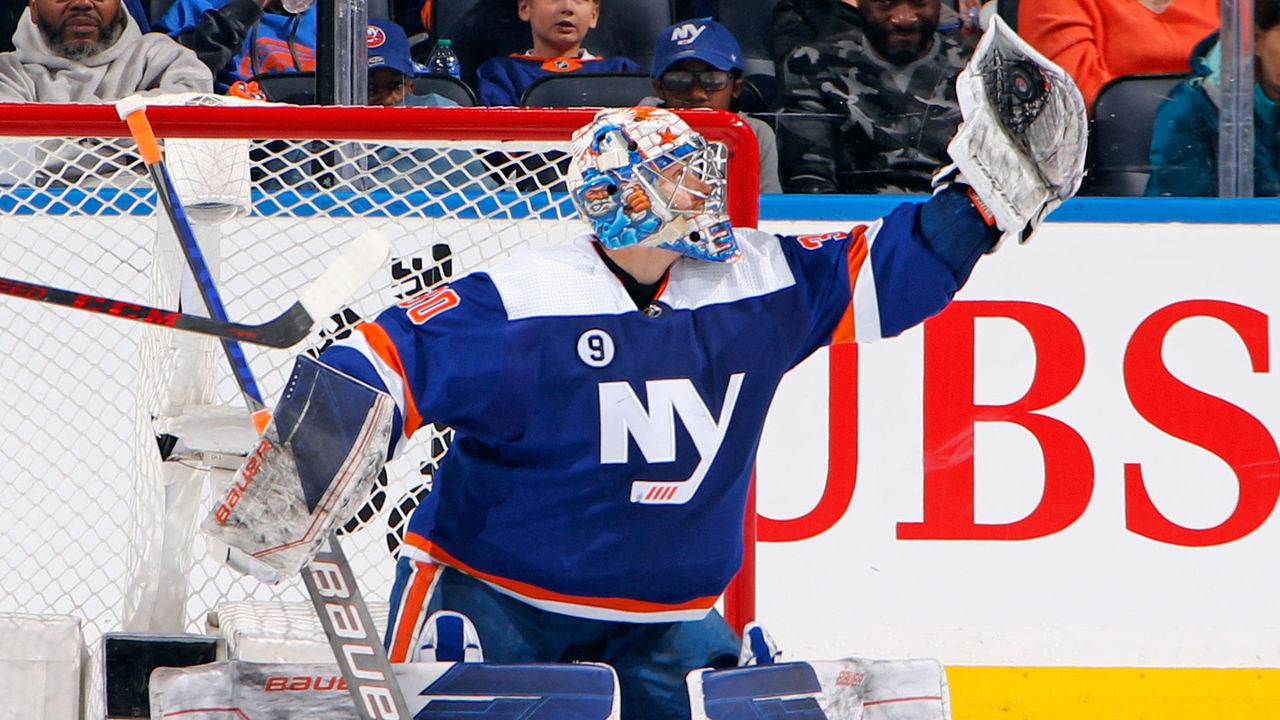
The NHL and the players' union are working on a 24-team playoff setup based on conference standings, sources told Sportsnet's Elliotte Friedman.
Friedman noted that nothing is set in stone and that both teams and players must still approve it. He added that discussions on the proposal could happen as early as Thursday.
Friedman admitted he's not certain of every detail, but said he has an idea of how it would work: The top four seeds (based on points percentage) in each conference would receive byes through the play-in but participate in a three-game tournament to serve as a tune-up.
The rest of the playoffs would be "bracketed." In each conference, the No. 5 seed faces the No. 12 seed (winner plays No. 4), No. 6 faces No. 11 (winner plays No. 3), No. 7 faces No. 10 (winner plays No. 2), and No. 8 faces No. 9 (winner plays No. 1).
The play-in series would be a best-of-five, and the rest of the postseason would be best-of-seven series.
Here's a look at the current standings based on points percentage:
Eastern Conference
| Rank | Team | PTS% |
|---|---|---|
| 1. | Boston Bruins | .714 |
| 2. | Tampa Bay Lightning | .657 |
| 3. | Washington Capitals | .652 |
| 4. | Philadelphia Flyers | .645 |
| 5. | Pittsburgh Penguins | .623 |
| 6. | Carolina Hurricanes | .596 |
| 7. | New York Islanders | .588 |
| 8. | Toronto Maple Leafs | .579 |
| 9. | Columbus Blue Jackets | .579 |
| 10. | Florida Panthers | .565 |
| 11. | New York Rangers | .564 |
| 12. | Montreal Candiens | .500 |
Western Conference
| Rank | Team | PTS% |
|---|---|---|
| 1. | St. Louis Blues | .662 |
| 2. | Colorado Avalanche | .657 |
| 3. | Vegas Golden Knights | .606 |
| 4. | Dallas Stars | .594 |
| 5. | Edmonton Oilers | .585 |
| 6. | Nashville Predators | .565 |
| 7. | Vancouver Canucks | .565 |
| 8. | Calgary Flames | .564 |
| 9. | Winnipeg Jets | .563 |
| 10. | Minnesota Wild | .558 |
| 11. | Arizona Coyotes | .529 |
| 12. | Chicago Blackhawks | .514 |
Another major change in this format would be the lack of reseeding. For example, if a No. 10, 11, or 12 seed managed to pull off an upset in the Eastern Conference play-in, the higher-ranked winner of Toronto and Columbus would still play Boston next.
This conference-based format would erase the NHL's much-maligned divisional playoff system - at least for one season.
Copyright © 2020 Score Media Ventures Inc. All rights reserved. Certain content reproduced under license.
Jets’ Wheeler: 24-team playoffs could give bubble teams an edge
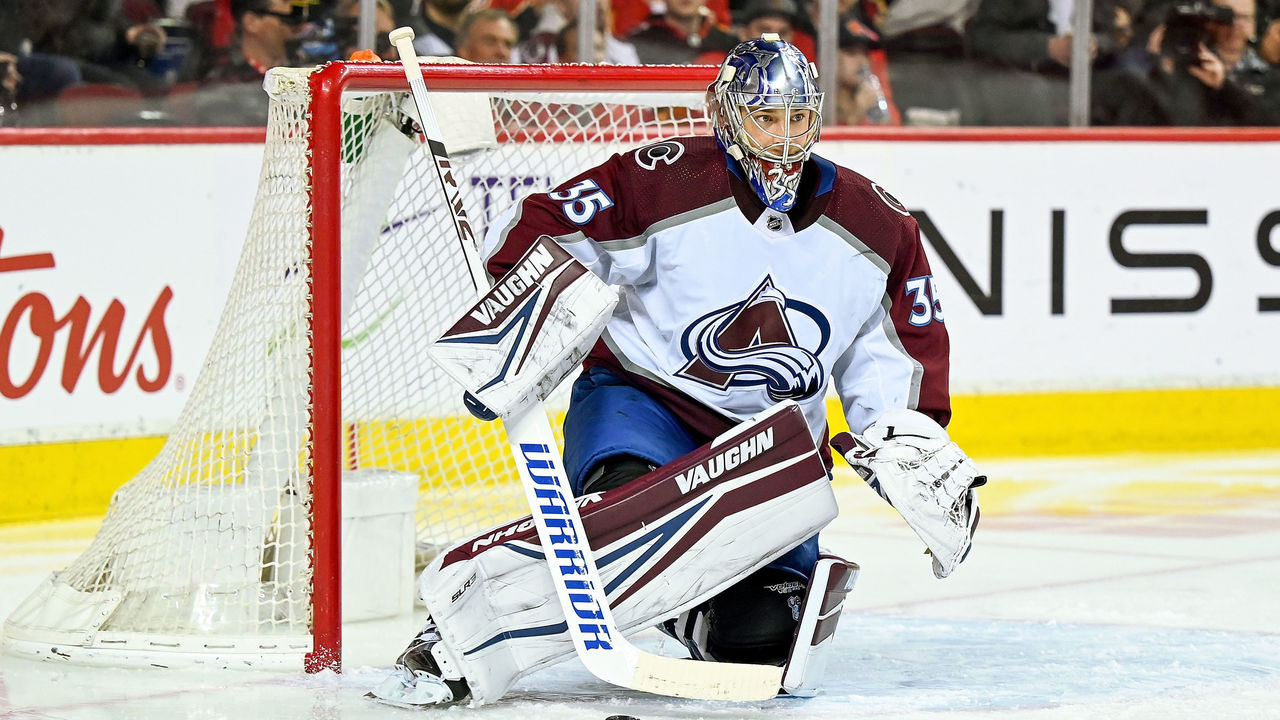
Winnipeg Jets captain Blake Wheeler believes a 24-team playoff format could offer bubble teams a leg up on the competition.
"I think what you need to be really conscientious of in this situation is that there are some teams that've had incredible regular seasons and you don't want to handicap them as well," Wheeler said on Wednesday's edition of "Dreger Cafe."
"I think the hard thing would be to have the bubble teams play a play-in and all of the sudden now Boston or St. Louis or Colorado who've been at the top of the standings all year, they're sitting there cold and have to play a team that's already played a three-to-five game series and they're coming in hot."
The NHL and NHLPA are reportedly making progress toward a 24-team playoff format. The expanded bracket would see clubs like the Montreal Canadiens and Chicago Blackhawks - who had an outside chance of making the playoffs when the season was suspended March 12 - included in the postseason.
Wheeler's Jets currently occupy the first Western Conference wild-card spot but have played two more games than the three teams directly below them and would potentially be involved in the play-in.
The veteran winger added that he isn't against the idea of an expanded playoff field but believes there must be meaningful games for all teams beforehand.
"When I say the games matter, I'm talking about do-or-die situations come up so that the players are in somewhat decent shape and so that the competitive balance is intact," Wheeler said.
Meanwhile, Nashville Predators forward Matt Duchene said Tuesday that he'd like to see the playoffs carried out in a more traditional fashion to avoid a "COVID Cup," where fans and pundits may place an asterisk beside the champion.
Copyright © 2020 Score Media Ventures Inc. All rights reserved. Certain content reproduced under license.
Tocchet: Hall won’t consider taking 1-year deal because of pandemic
Find out the latest on COVID-19's impact on the sports world and when sports are returning by subscribing to Breaking News push notifications in the Sports and COVID-19 section.
The coronavirus has cost Taylor Hall and other pending unrestricted free agents money this summer.
Before the pandemic hit, the NHL salary cap was projected to rise to somewhere between $84 million and $88.2 million for next season. Now, with the campaign on pause, the 2020-21 cap ceiling is unlikely to rise above the current $81.5 million.
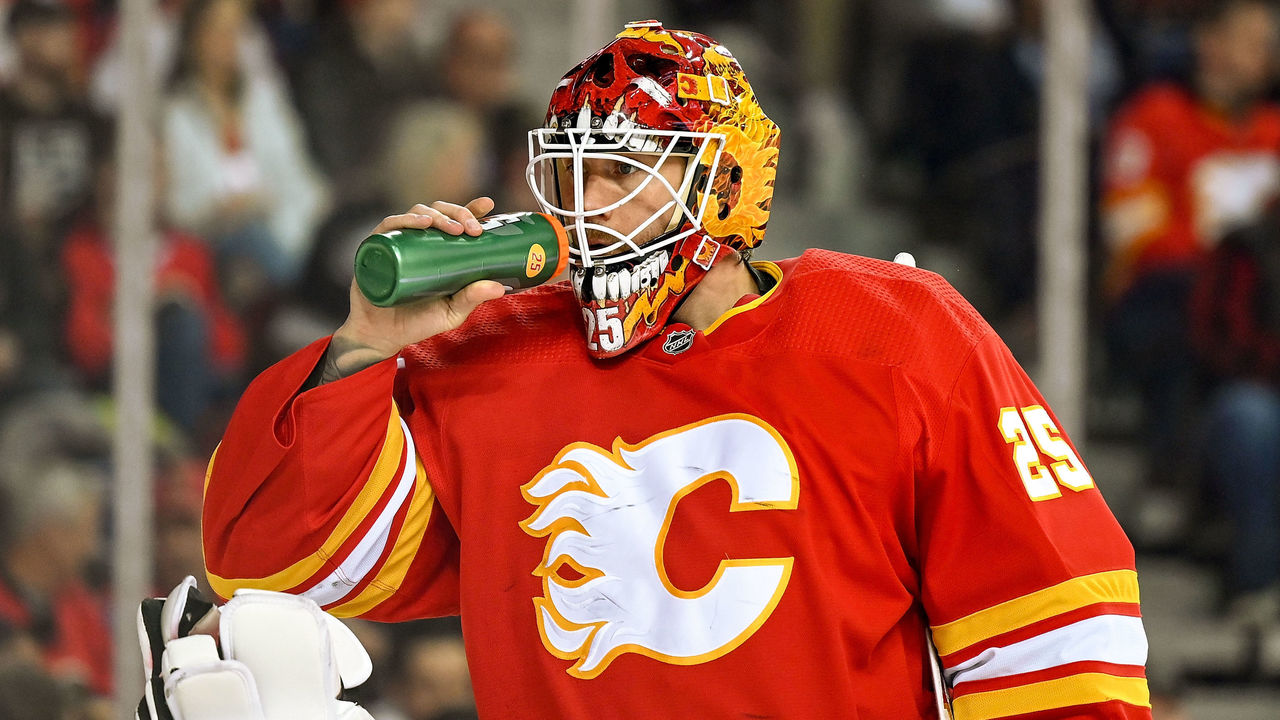
Despite this, Hall doesn't plan on signing a one-year contract in order to get a bigger long-term payday a year from now, according to Arizona Coyotes head coach Rick Tocchet.
"You're talking about a guy who, before this, was going to make a ton of money," Tocchet said on the "ESPN On Ice" podcast, according to ESPN's Greg Wyshynski. "With this whole pandemic, like he told me, he doesn't want to go through another year trying to play on a one-year contract. He wants to get settled somewhere. So, he's got a lot of different options that he's gotta weigh."
Where Hall chooses to spend the next chapter of his career remains to be seen, but Tocchet believes the Coyotes have a strong chance.
"I'm not saying he is going to sign here, but I definitely think we're a team he's very interested in staying with," Tocchet said.
General manager John Chayka would have to get creative to keep Hall in Arizona. The Coyotes already have $79.9 million committed to their payroll for next season, according to CapFriendly. Multiple players would likely have to be traded in order for the team to afford Hall.
The former Hart Trophy winner was traded from the New Jersey Devils to Arizona in January. He's totaled 52 points in 65 games this season between the two clubs.
Copyright © 2020 Score Media Ventures Inc. All rights reserved. Certain content reproduced under license.
NHL Free Agents & Trade Candidates – Vancouver Canucks
Leafs’ Barrie: ‘It’s a weird time’ to be entering free agency
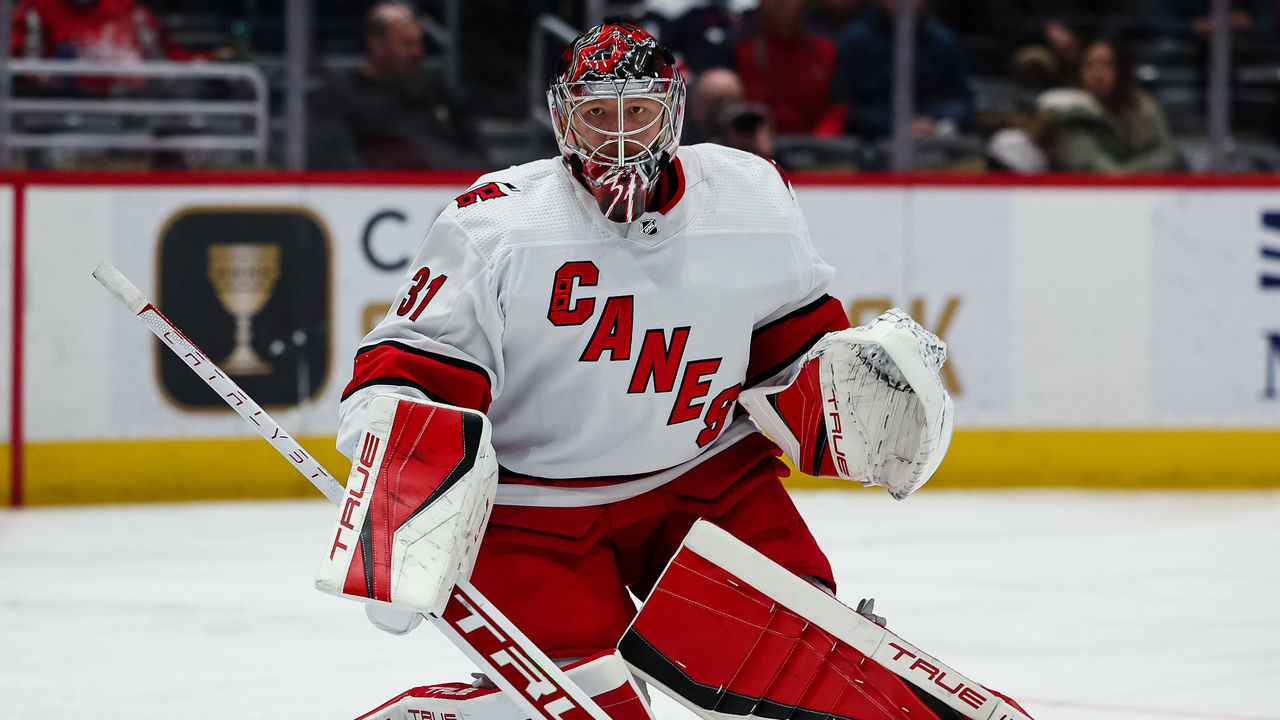
Toronto Maple Leafs defenseman Tyson Barrie is set to become an unrestricted free agent this offseason, but when that will be remains unclear with the 2019-20 campaign still on pause.
"It's a weird time to be heading into free agency," Barrie said Wednesday, according to TSN's Kristen Shilton.
"We're still not certain on what's going to play out here. At this point, I think all I can do is focus on getting ready to play, if we are going to play, and take a run with the Toronto Maple Leafs."
The Stanley Cup is traditionally awarded in early June and the free-agent signing period begins July 1. As the NHL continues to explore different scenarios for resuming play, several critical factors that will impact free agency - including what next season's salary cap will be - still need to be discussed.
While so much remains uncertain, Barrie is clear about what he's searching for when it comes to his next team.
"It's got to be the right fit. I think it has to be a spot where they are in need of someone like myself," he said. "A good team headed in the right direction and a good organization. I think there's a lot of right organizations that tick those boxes."
Barrie signed a four-year, $22-million deal with the Colorado Avalanche ahead of the 2016-17 season and was traded to Toronto last July. The veteran rearguard ranks fifth on the team and first among defensemen with 39 points while logging 21:53 of average ice time through 70 games.
Several other coveted talents are also set to become unrestricted free agents this offseason, including Arizona Coyotes forward Taylor Hall and St. Louis Blues defenseman Alex Pietrangelo.
Copyright © 2020 Score Media Ventures Inc. All rights reserved. Certain content reproduced under license.
QUIZ: Test your knowledge of MVP winners
It takes a special caliber of athlete to win an MVP award. All the stars must align at just the right time to be named the premier player in a specific sport. How much do you know about the athletes who've claimed MVPs over the years? Find out by taking our quiz below.
Copyright © 2020 Score Media Ventures Inc. All rights reserved. Certain content reproduced under license.
5 best player debuts of the last 25 years
Few moments over the course of a career are as special for NHL players as their very first game. Some relish the spotlight, putting forth a memorable effort in their introduction to the hockey world.
With this in mind, we're going to remember five of the best player debuts in recent memory. The timeframe for this exercise spans 25 seasons, which, unfortunately, forces us to leave out classic examples such as Mario Lemieux's infamous first goal, on his first shift, on his first shot. Other claims to fame, like Philadelphia Flyers alumnus Al Hill notching five points and a Gordie Howe hat trick in his debut in 1977, were also left out.
Before we get to the list itself, we're going to list some honorable mentions for players that had incredible moments in their debuts but didn't find the scoresheet frequently enough.
Jordan Eberle, 2010
Eberle, having already established himself with a legendary performance for Canada at the world juniors a year prior, once again took center stage with an incredible goal in his NHL debut. That toe drag and backhand finish are moves players dream about pulling off once in their careers, and it only took Eberle two periods.
Vladimir Tarasenko, 2013
After spending three seasons in the KHL, Tarasenko finally came to the Blues in 2013 and burst onto the NHL scene. St. Louis' 2010 first-rounder torched the Detroit Red Wings in his debut, and his second goal of the night was an absolute beauty.
Elias Pettersson, 2018
Pettersson hardly wasted any time before showcasing his outstanding shot to Canucks fans, burying an absolute laser over then-Flames goaltender Mike Smith in the first period of his first NHL game.
Now, let's get to the list.
5. Derek Stepan, Rangers

Date: Oct. 9, 2010
Opponent: Buffalo Sabres
Stats: 3 G, 3 SOG, 17:21 TOI, GWG
A second-round pick of the Rangers in 2008, Stepan got his shot in the NHL after dominating at the University of Wisconsin and captaining the United States to world junior gold in 2010. He was more than ready, as he buried a hat trick on only three shots to lead New York to a 6-3 victory in Buffalo.
Stepan's scorching first game may not have been the most significant moment of his Rangers tenure, as he delivered a Game 7 overtime dagger at Madison Square Garden in 2015, but his three-goal debut was a historic start to a memorable tenure with the Blueshirts that featured 360 points in 515 games.
4. Fabian Brunnstrom, Stars

Date: Oct. 15, 2008
Opponent: Nashville Predators
Stats: 3 G, 5 SOG, GWG 14:37 TOI
A hot commodity prior to the 2008-09 campaign after posting 37 points in 54 games in the Swedish Elite League, Brunnstrom landed with the Stars on a two-year contract before making the most of his NHL debut. The highly skilled winger became the third NHL player ever to bag a hat trick in his first game. He even had a fourth goal disallowed.
Sadly for Brunnstrom, his sparkling debut was the peak of his NHL career, as he only played 104 games, never again registering a multi-goal performance.
3. Troy Grosenick, Sharks

Date: Nov. 16, 2014
Opponent: Carolina Hurricanes
Stats: 45-save shutout
Grosenick's story is easily the most unique on our list, and proof that you never know when it might be your night. The undrafted Grosenick was called up for his first NHL start two years after being a Hobey Baker finalist with Union College and while in the midst of posting pedestrian numbers in the minors.
He was put to the test early and often as the Sharks were outshot 45-18. Grosenick was up to the task, though, turning away every puck he faced to break a then-47-year record for saves in a debut shutout. After the historic showing, San Jose stuck with the hot hand and kept Grosenick in for another start. He allowed three goals on 13 shots against the Sabres and hasn't played in the NHL since.
2. Ryan Poehling, Canadiens

Date: April 6, 2019
Opponent: Toronto Maple Leafs
Stats: 3 G, 3 SOG, 11:22 TOI, Shootout winner
It was a meaningless final game of the season for both teams, but when Toronto and Montreal meet on a Saturday night, it's always a grand stage. Poehling, a coveted prospect in the Habs organization, stole the show on this particular evening.
After the Leafs jumped out to a 2-0 lead, Poehling registered back-to-back goals to bring the Canadiens back into the game. He then scored a late equalizer in the third period to force overtime and scored the eventual game-winning shootout goal. Talk about endearing yourself to one of hockey's most passionate fanbases.
1. Auston Matthews, Maple Leafs

Date: Oct. 12, 2016
Opponent: Ottawa Senators
Stats: 4 G, 6 SOG, 17:37 TOI
After Toronto drafted Matthews No. 1 overall in June 2016, expectations for his rookie season were sky-high. With the entire hockey world watching the lone early game on the opening night slate in 2016, he cemented his status as a burgeoning superstar.
Matthews became the first player in modern NHL history to score four goals in his debut, and his world-class skill was on full display when he stripped one Senator at center ice, nutmegged another, then won a puck battle versus Erik Karlsson before depositing a sharp-angle bullet for tally No. 2.
Despite occurring in an overtime loss, Matthews' dominant four-goal game will live on forever. On top of the eye-popping stat line, that evening was the start of a special rookie campaign that resulted in a Calder Trophy, and a major turning of the tide for a Maple Leafs franchise long stuck in the mud.
Copyright © 2020 Score Media Ventures Inc. All rights reserved. Certain content reproduced under license.