Montreal Canadiens forward Nick Suzuki hasn't been looking to exact revenge on the Vegas Golden Knights since being traded by the club in 2018.
Suzuki was drafted by the Golden Knights with the 13th overall pick in the 2017 NHL Draft but was quickly traded to the Canadiens in a blockbuster deal involving ex-Habs captain Max Pacioretty.
"I think it worked out for both teams obviously. When Marc called me and said I was a big piece that they wanted I just wanted to show that Montreal made the right decision in bringing me over and I want to do everything I can for this franchise," Suzuki said via TSN on Friday when asked if he's ever wanted to prove Vegas wrong for moving him.
"It was more about proving Marc right to want me in the deal."
Suzuki was dealt to Montreal alongside Tomas Tatar and a second-round pick for Pacioretty. He never suited up in a game for Vegas and was ultimately with the organization for just one year.
The two teams are now set to meet in Round 3 of the Stanley Cup Playoffs, with both Suzuki and Pacioretty playing big roles with their respective club since the trade.
Suzuki put together a solid rookie season with the Canadiens last year, racking up 13 goals and 41 points in 71 games. This season, he stepped his game up and recorded 41 points in just 56 contests.
He's played an integral role with Montreal so far in the postseason, scoring four goals and adding four assists in 11 games.
Pacioretty has continued his top-notch play with Vegas since arriving in 2018. Over the span of the last three seasons, he leads the club in goals (78) and points (157). He has four goals and four assists in seven games so far during the playoffs.
Once again the Lightning and Knights are overwhelming favorites to meet in the Stanley Cup Final, but as we learned last year, these things don't always play out according to script.
1. Golden Knights (-500) vs. 4. Canadiens (+375)
Regular-season stats
GOLDEN KNIGHTS
STAT
CANADIENS
40-14-2
Record
24-21-11
54.02 (5th)
xGF%*
53.00 (11th)
54.56 (4th)
CF%*
54.31 (6th)
53.47 (9th)
HDCF%*
51.88 (12th)
9.5 (3rd)
SH%*
7.52 (25th)
.920 (11th)
SV%*
.914 (21st)
17.8 (22nd)
PP%
19.2 (17th)
86.8 (1st)
PK%
78.5 (23rd)
*five-on-five
Playoff stats
GOLDEN KNIGHTS
STAT
CANADIENS
8-5-0
Record
8-3-0
56.04 (3rd)
xGF%*
53.48 (6th)
54.09 (5th)
CF%*
50.97 (9th)
54.95 (5th)
HDCF%*
50.57 (8th)
8.98 (2nd)
SH%*
6.04 (12th)
.920 (12th)
SV%*
.942 (3rd)
14.3 (14th)
PP%
18.8 (8th)
71.4 (12th)
PK%
90.3 (1st)
*five-on-five
Vegas and Montreal are set to meet for the first time since January 2019, the longest two third-round opponents have gone without playing each other in the lead up to a head-to-head series. The Canadiens won both meetings 5-4 during the 2019-20 season - both victories coming after regulation - and is 5-1-0 all time against Vegas.
This is familiar territory for the Knights, who were betting favorites to win the Stanley Cup heading into last season's conference finals before losing 4-1 to the Dallas Stars. This will be Vegas' third appearance in the semifinals in its short four-year history, though it's still chasing that elusive Cup win.
It's a series rife with storylines as the league's most successful franchise takes on its newest. Former Montreal captain Max Pacioretty will go up against his former team, as will Nick Suzuki, the Canadiens' young star who was acquired in the trade with Vegas. It's a trip home for Marc-Andre Fleury, the league's active leader in wins among Quebec-born goalies. It's a David vs. Goliath story in the sense that Montreal finished the regular season with the fewest points among playoff teams, while Vegas accrued the joint-most.
Most importantly, it's a meeting between the two teams with the best underlying numbers from the second round. The Canadiens posted an unheralded 68.1% share of the expected goals at five-on-five in their sweep of the Winnipeg Jets, while the Knights posted an excellent 59.0% share over six games against the Colorado Avalanche. The quality of opponent in these series was drastically different, but there's something to be said about Montreal winning the most lopsided playoff series in the last 14 seasons.
Here are the top playoff series total 5v5 xGF% (score/venue adjusted) since 07-08. Montreal over Winnipeg this year leads the pack (Vegas over Colorado this year so far at 2nd is *very* interesting).
Say what you want about the North Division, but the run Montreal's on is truly remarkable. The Canadiens have won seven straight and haven't trailed in 437:45 - the second-longest streak in playoff history. They've outscored their opponents 24-12 over that span, posted a 31.6% success rate with the man advantage, and a perfect 100% on the penalty kill (15 attempts) with three shorthanded goals.
Vegas' run has been equally impressive, winning four straight over the Presidents Trophy-winning Avalanche, and doing so in dominant fashion. The Knights outscored Colorado 15-6 at five-on-five over the final four games and generated 50 high-danger chances to just 31 against. Vegas was full value for its series win, though Philipp Grubauer allowing 5.16 goals above expected in the final three games certainly didn't help Colorado's cause. Connor Hellebuyck saved 2.04 goals above expected while being swept by Montreal.
The Knights have certainly benefitted from the postseason's second-highest shooting percentage at five-on-five (8.98), and while regression is possible against Carey Price, who leads all goaltenders with a 4.8 GSAA in these playoffs, it's certainly not probable, either. Both goalies Vegas has faced so far rank in the bottom half of the playoffs in GSAA (minimum four appearances), while both goalies Montreal has faced rank inside the top five. For as well as Fleury has looked at times, he sits eighth.
While goaltending will be key here for the Canadiens once again, so too will special teams. The Knights have done the majority of their damage at five-on-five in these playoffs, as both special-teams units have been abysmal. Their power play has been anemic and the penalty kill victimized. Conversely, Montreal's penalty kill has been the top unit in the playoffs, holding a really strong Jets power play goalless. If the Habs' units can stay hot and maintain a big edge in this series, it will be a lot closer than the line indicates.
They will need to as well, because for as strong an even-strength team as the Canadiens have been over the years, Vegas is an entirely different beast. The Knights have ranked top-five in expected goal share at five-on-five in each of the last three seasons, overwhelming teams by rolling all four lines and staying aggressive on the forecheck. They play the same style as Montreal, only they do it better.
The Canadiens have held up well defensively in these playoffs, playing low-event hockey, but how will they fare against an incredibly deep Vegas lineup? Forward depth was supposed to be a strong suit for the Leafs and Jets, but the absence of John Tavares and Mark Scheifele quickly mitigated that. Vegas will need to contribute in this series should its top line be contained by Montreal's Phillip Danault, Brendan Gallagher, and Artturi Lehkonen.
The Canadiens' top line hasn't provided a ton of offense, but its ability to shut down the opposition's best players and allow the rest of Montreal's forwards to shine has been integral to this team's playoff success. It won't be as straightforward against a Vegas team that's received 21 goals total from its second and third line.
Vegas is deserving of being priced as heavy favorites, but this is extreme. The Canadiens have the depth to match up with the Knights, and while they can't match them for talent, they can bridge the divide with strong goaltending and efficiency on special teams. The Knights will have too much in the end as they book their place in the Cup final, but it won't come as easy as many are predicting.
Pick: Over 5.5 games (-110)
3. Lightning (-300) vs. 4. Islanders (+250)
Regular-season stats
LIGHTNING
STAT
ISLANDERS
36-17-3
Record
32-17-7
53.22 (10th)
xGF%*
54.07 (4th)
53.12 (7th)
CF%*
49.35 (16th)
51.91 (11th)
HDCF%*
56.21 (3rd)
8.34 (14th)
SH%*
8.37 (13th)
.921 (10th)
SV%*
.931 (3rd)
22.2 (9th)
PP%
18.8 (20th)
84.2 (4th)
PK%
83.7 (6th)
*five-on-five
Playoff stats
LIGHTNING
STAT
ISLANDERS
8-3-0
Record
8-4-0
51.91 (7th)
xGF%*
46.38 (12th)
48.17 (10th)
CF%*
41.97 (15th)
55.91 (4th)
HDCF%*
45.89 (13th)
7.32 (5th)
SH%*
9.81 (1st)
.941 (5th)
SV%*
.944 (2nd)
41.7 (1st)
PP%
28.1 (4th)
77.8 (8th)
PK%
61.5 (14th)
*five-on-five
Unlike in the other series, these teams are no strangers to one another. This is a rematch of last year's Eastern Conference Final, which the Lightning won 4-2 en route to winning the Stanley Cup. Both teams disposed of two very tough opponents to return to the semifinals, where Tampa are once again heavy favorites to repeat last season's success.
That's nothing new for the Islanders, who have continued to defy expectations in the playoffs, overcoming a 46.38% expected goal share and 41.97% Corsi share at five-on-five to beat both the Boston Bruins and Pittsburgh Penguins. But have they finally met their match in the conference final?
Tampa started the playoffs strong and has only improved, managing 55% of the expected goal share at five-on-five against a really good Carolina Hurricanes team. The Bolts have also scored the second-most goals per 60 minutes in these playoffs while allowing the third fewest. Everything is clicking for them at the moment, including a power play converting at an almost unheard of 41.7%.
When you watch the Tampa power play you quickly understand why. The amount of weapons on this team is almost unthinkable, and they complement each other perfectly. If the Islanders are to be successful in this series they'll need to slow down the Tampa power play, but given how much they've struggled on the penalty kill - a miserable 61.5% success rate in the playoffs - it's hard to see that happening.
When you break down the numbers it truly is remarkable the Islanders are still alive in these playoffs. They haven't been good at five-on-five, and while their power play has been solid, their penalty kill has also put them at a disadvantage on special teams. Not to discredit the Isles, but they've benefitted from an unsustainably high PDO.
Their .944 save percentage at five-on-five is a tad high, even given their quality in the crease, while a 9.81 shooting percentage - by far the highest of any team in the playoffs - is absolutely due for regression.
The reason for the Islanders' high shooting percentage is largely down to the quality of goaltending they've faced. In the first round, Tristan Jarry posted a miserable minus-6.44 GSAA while allowing 6.72 goals above expected. He directly cost the Penguins at least three games and was a driving force behind New York's success. In the second round, Tuukka Rask inexplicably played through a torn labrum in his hip and his play deteriorated as the series progressed, allowing an absurd 4.96 goals above expected over the last two games.
Andrei Vasilevskiy won't be nearly as generous. His heroics consistently bail the Lightning out on their rare off nights. He's saved a remarkable 7.38 goals above expected in these playoffs, and is second with a 4.72 GSAA - narrowly behind Price, and well ahead of the rest of the pack. Solving him is going to prove a much tougher task for the Islanders, who are generating just 2.06 expected goals per 60 minutes and 8.6 high-danger chances per 60 at five-on-five in the playoffs, by far the worst marks among the final four teams.
With the Lightning expected to out-chance the Islanders throughout this series, New York will require an other-worldly performance between the pipes to pull off the upset. But consecutive semifinal appearances mean the Islanders are doing something right.
They're disciplined, structured, and opportunistic. They get timely saves and score timely goals. They're well-coached and everyone buys in. We know the Islanders are capable of knocking off the giants, but Tampa doesn't appear to be that giant.
The Lightning's unique blend of world-class talent and grit allows them to play and succeed in any environment, and they have the blueprint for defeating Barry Trotz's team, doing so at this stage last season without Steven Stamkos. All signs point to history repeating itself here.
Pick: Lightning -1.5 (-120)
Alex Moretto is theScore's supervising editor of sports betting. Find him on Twitter @alexjmoretto.
Owen Power, projected No. 1 overall pick for the upcoming 2021 NHL draft, is leaning towards playing another NCAA season at Michigan instead of turning pro.
"I think right now I'm probably leaning more towards going back to school," Power said during an interview with NHL Network on Friday.
"It's something I'd like to do, try and get the true experience of playing college hockey. At the end of the day, it obviously depends on what the team wants and what everyone around me thinks is best. I don't think there's really a bad option."
Central Scouting labeled Power the top North American skater heading to the draft in their final rankings in May. The 18-year-old defenseman had 16 points in 26 games for the Wolverines this past season and won gold with Canada at the world championship in Latvia.
The Buffalo Sabres, Seattle Kraken, and Anaheim Ducks hold the top three picks in this year's draft.
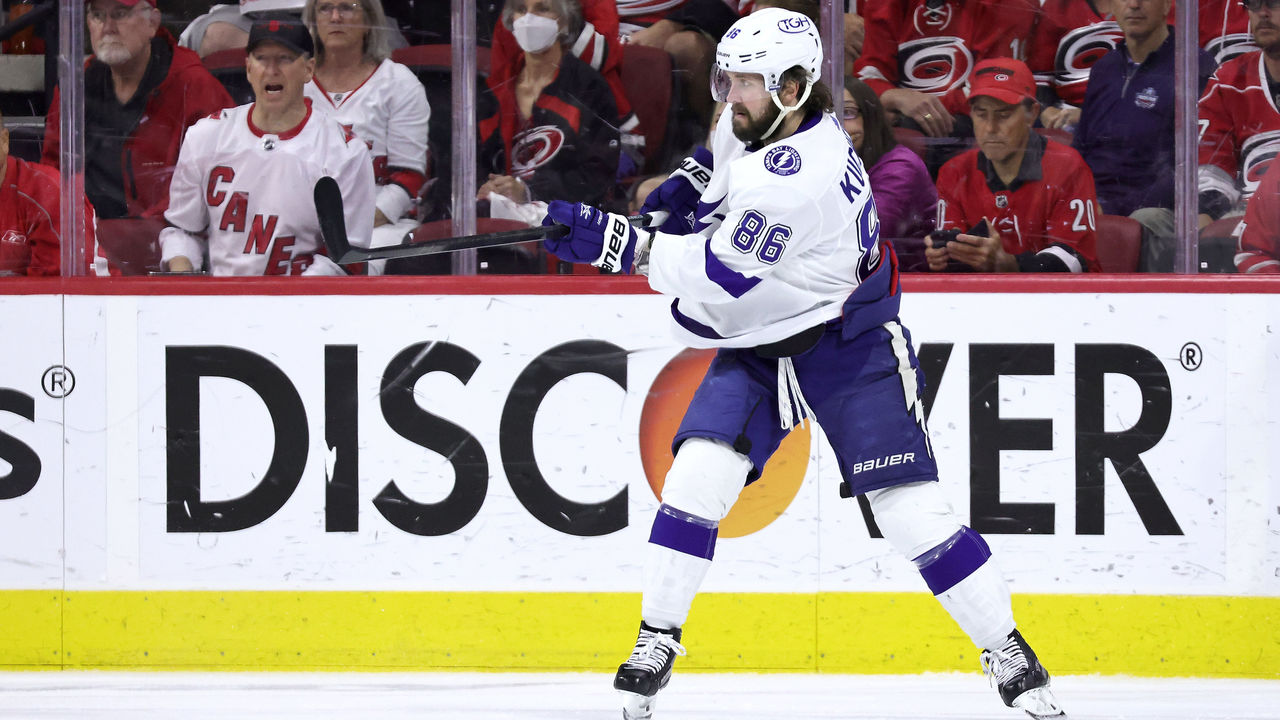
"I didn't make the rules with the cap," Kucherov said Friday, according to The Athletic's Joe Smith. "It's not me. I didn't do anything on purpose. I had to do the surgery. I had to go through the whole five months of rehabilitation, and when the time came and I was ready to play, I was playing."
Kucherov missed the entire 2020-21 campaign after undergoing hip surgery in the offseason, allowing the Bolts to alleviate their cap crunch by placing his $9.5 million average annual value on long-term injured reserve, where it wouldn't count against the cap.
The reigning Hart Trophy winner returned for the playoff opener and currently leads all skaters with 18 points in 11 playoff games.
If Kucherov hadn't missed the entire season, Tampa Bay likely would've been forced to part with a valuable player, such as Alex Killorn, to get under the cap. Otherwise, the Lightning would've likely had to send a significant sweetener to another team for taking on a player with an undesirable contract, like fourth-liner Tyler Johnson, who carries a $5-million cap hit.
However, Tampa was able to activate Kucherov for the postseason with no repercussions since the cap doesn't apply to the playoffs.
The Bolts' final cap hit was $98.8 million - $17.3 million over the ceiling - per CapFriendly.
The Carolina Hurricanes' Rod Brind'Amour, Minnesota Wild's Dean Evason, and Florida Panthers' Joel Quenneville are the three finalists for the Jack Adams Award, given annually to the NHL's coach of the year.
Brind'Amour has guided the Hurricanes to three straight postseason berths since becoming the team's head coach, including a Central Division title this past campaign. Carolina went 36-12-8, finishing just two points off a share of the league lead. This is the first time Brind'Amour's been a Jack Adams finalist.
Evason led the Wild to a surprisingly stellar regular season, going 35-16-5 - good enough for third in the West Division. Minnesota finished just seven points back of the Colorado Avalanche and Vegas Golden Knights. This was Evason's first full campaign behind an NHL bench after taking over as interim coach midway through the 2019-20 season.
Few people gave the Panthers much of a chance to make any noise this year, but Quenneville guided the team to its best season in franchise history in terms of points percentage (.705). The Cats finished just one point back of the Canes for first in the Central. Quenneville is seeking his second career Jack Adams Award after winning in 1999-00 with the St. Louis Blues.
Taylor Hall is open to a reunion with the Boston Bruins as he's set to enter unrestricted free agency.
"I see a fit, hopefully they feel the same," he told reporters Friday.
Hall added that finding the right team will be more important than cashing in this summer.
"I'm not looking to absolutely maximize my value at this point in my career. I've been fortunate enough to make some good money in this league," he said. "At this point, it's more of a fit for me than maybe money, or long-term thing."
Hall's estimated career earnings sit at $52.2 million, according to CapFriendly.
The 29-year-old clearly enjoyed his time in Beantown. After signing a one-year, $8-million deal with Buffalo in the offseason, he produced just two goals and 17 assists in 37 games with the Sabres. However, he was rejuvenated after a deadline trade landed him in Boston, as he recorded eight goals and six helpers in 16 contests with the Bruins. He contributed five points in 11 playoff games.
The Bruins have multiple key free agents to take care of, including franchise pillars David Krejci and Tuukka Rask. They have $27 million in projected cap space.
Evolving-Hockey projects Hall will sign a seven-year deal with an annual cap hit of $7.321 million.
The 2018 Hart Trophy winner has played for four teams in the last two seasons.
The Boston Bruins netminder played through a torn labrum in his hip, he told reporters Friday. Rask will undergo surgery within the next month and will likely be out until January or February.
"It was hard," he said. "I had it all year."
Rask added he thinks he hurt his hip during the 2020 playoffs against the Carolina Hurricanes. Wear and tear made the injury worse over time. While compensating for the hip, his back seized up, and he could barely walk for a week, which forced him to miss some time during the regular season.
The pending unrestricted free agent also reiterated that he wants to play next year but won't do so for any NHL team other than the Bruins. Rask was then asked what he would do if Boston doesn't want to re-sign him.
"Maybe I go home and play in Finland," he said. "I'm part owner of a team there. Who knows?"
Rask posted a .913 save percentage and a 2.28 goals against average in 24 games during the regular season. The 33-year-old started all 11 postseason contests for the Bruins, sporting a .919 save percentage and a 2.36 goals against average.
With the second round of the Stanley Cup Playoffs in the books, theScore counts down the top five players of the postseason so far in all three positional groups. Players on eliminated teams are eligible for this list, as these rankings are explicitly based on cumulative performances from the first two rounds.
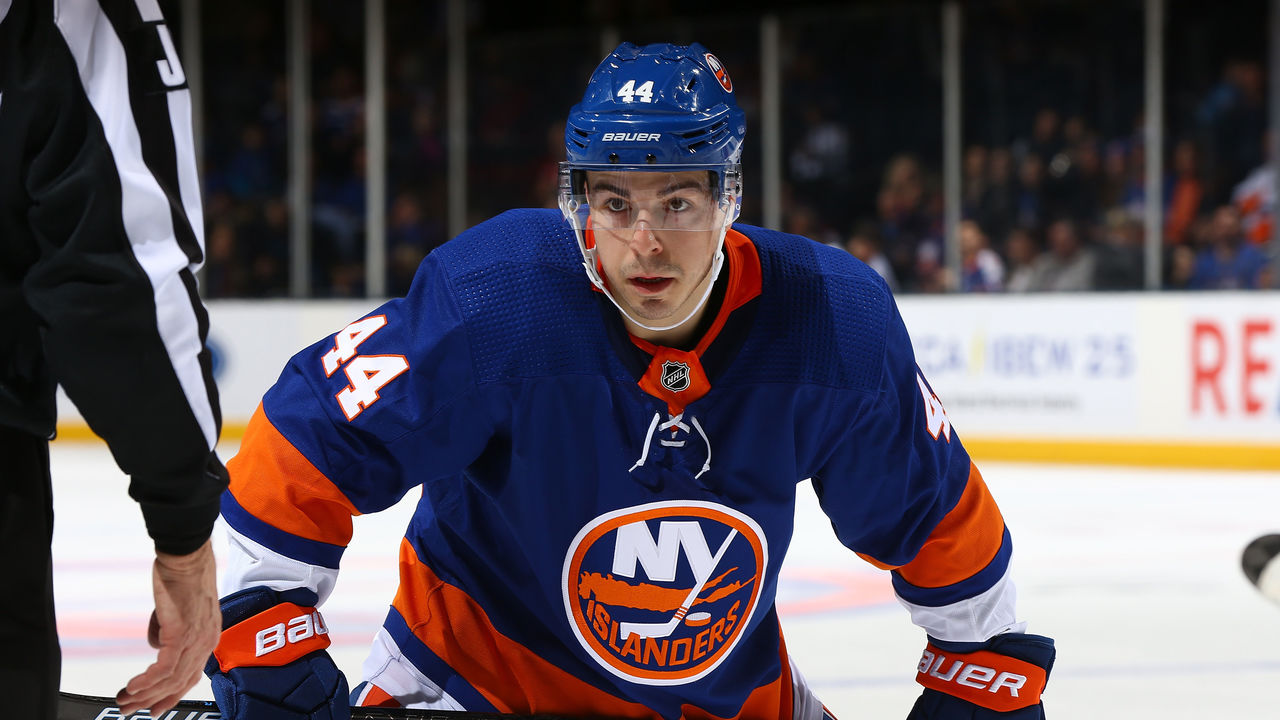
Pageau lives for playoff time. After a rather pedestrian regular season, the Islanders' pesky pivot has woken up when it matters and currently has the second-most points among forwards in the playoffs. He was particularly strong against the Bruins, registering six points, including two assists in the Game 6 clincher.
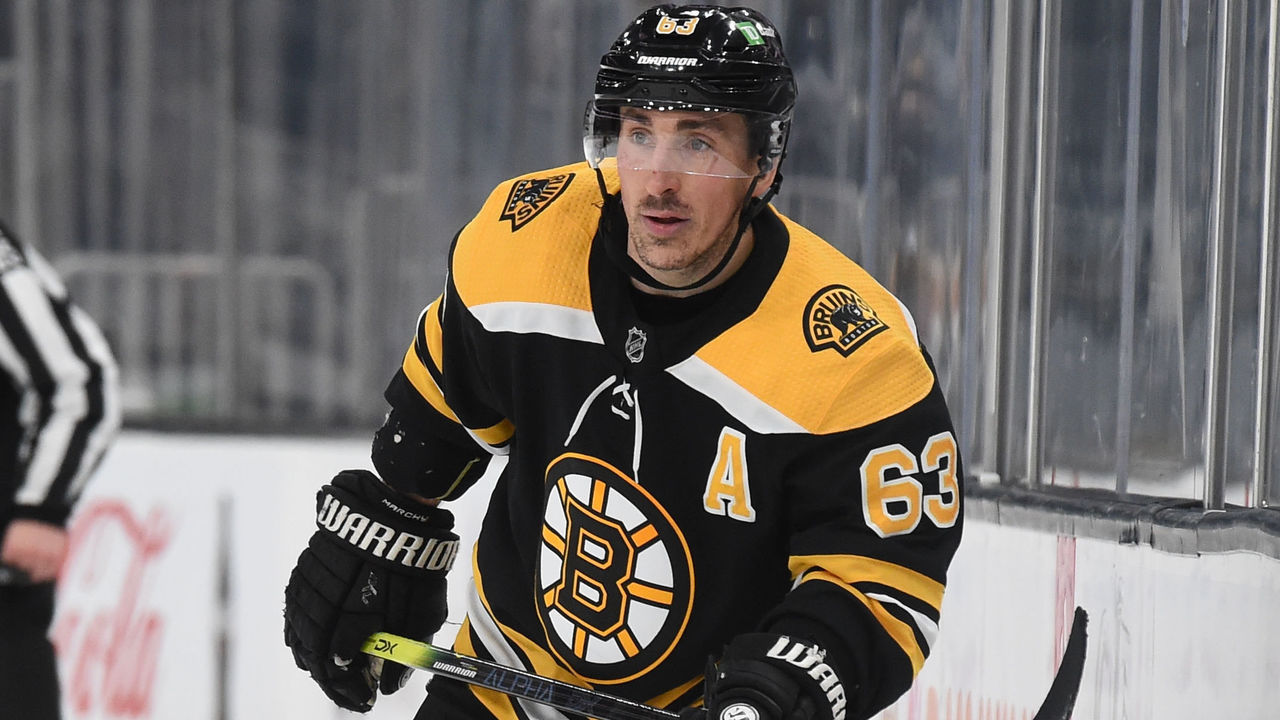
4. Brad Marchand, Bruins
Steve Babineau / National Hockey League / Getty
GP
P
xGF%
ATOI
11
12
60.35%
20:40
Boston's second-round elimination is no fault of its top line. Marchand was spectacular through 11 games and delivered five goals against the Islanders. The 33-year-old maintained his reputation as a playoff performer and now has 64 points in his last 60 postseason contests stretching back to 2018.
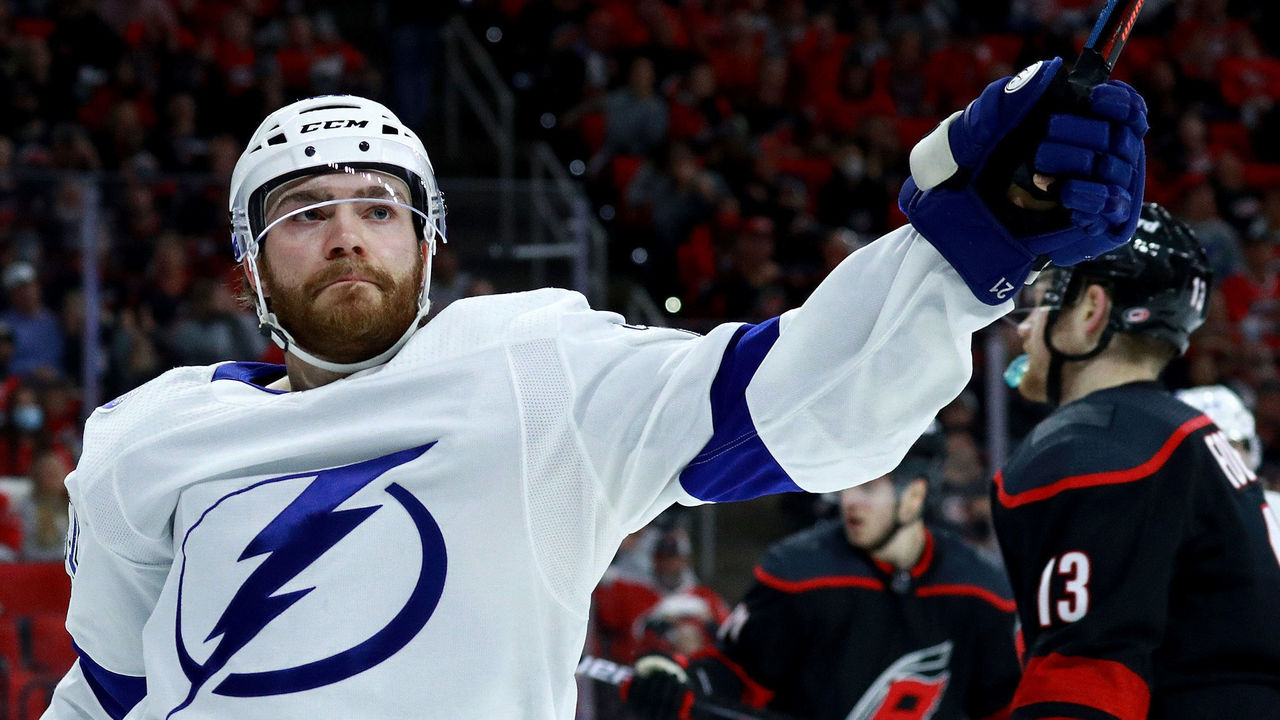
3. Brayden Point, Lightning
Grant Halverson / Getty Images Sport / Getty
GP
P
xGF%
ATOI
11
12
58.49%
19:28
Point is another player who continuously rises to the occasion in the playoffs. He was instrumental in the Lightning's dismantling of a deep Carolina team and enters Round 3 tied for eighth in scoring and tied for first in goals. Dating back to last season's Cup run, Point's registered 45 points in 34 playoff games.
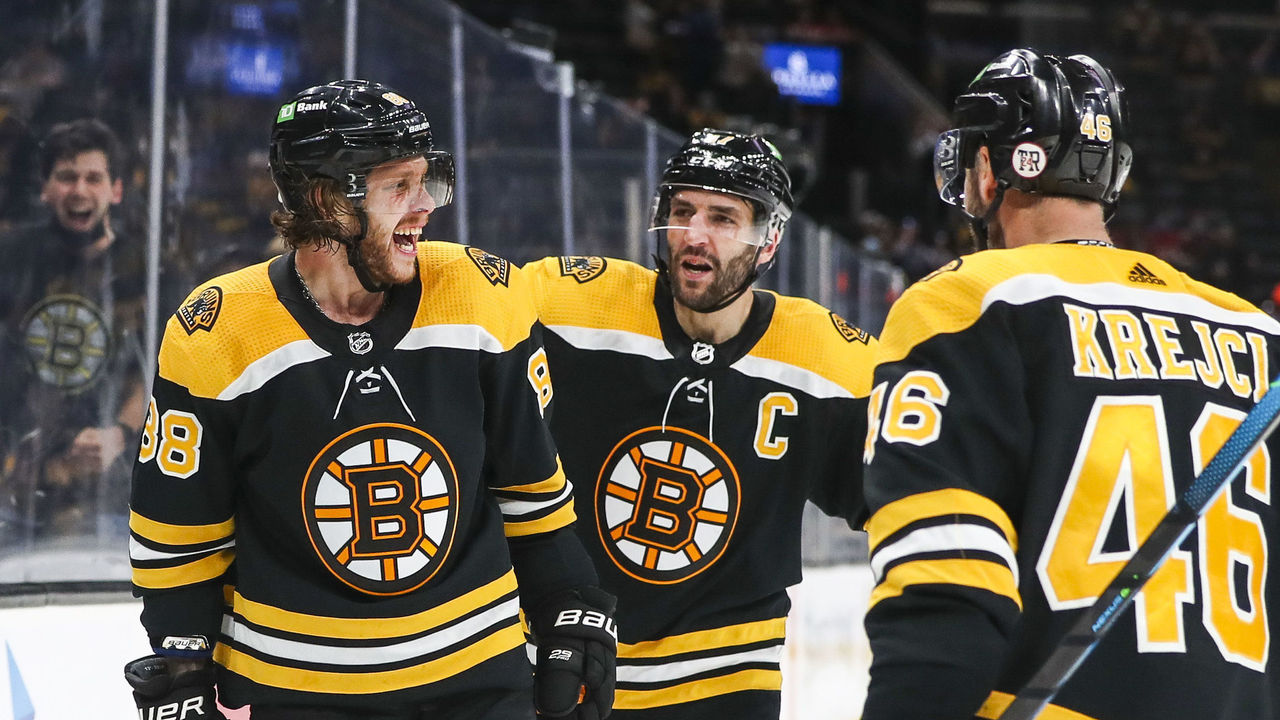
2. David Pastrnak, Bruins
Adam Glanzman / Getty Images Sport / Getty
GP
P
xGF%
ATOI
11
15
62.11
19:44
Pastrnak did all he could to will the Bruins into Round 3, but unfortunately for him, the lasting memory of his postseason efforts will be an inexplicable miss in a Game 4 loss versus the Islanders. Aside from that blunder, Pastrnak was brilliant. He totaled nine points in six contests versus New York and sits second overall in playoff scoring.
1. Nikita Kucherov, Lightning
Gregg Forwerck / National Hockey League / Getty
GP
P
xGF%
ATOI
11
18
58.58%
19:27
Kucherov is playing at a Conn Smythe-worthy level once again. Last season's playoff leading scorer is well on pace to do so again and looks bound to create a scoring chance each time he touches the puck. Kucherov's notched the majority of his points on the power play (13) but is still generating expected goals at an elite rate at five-on-five. His even-strength shooting percentage (5%) is the second-worst among all Bolts forwards, so if that begins to trend upward as the playoffs progress, Tampa could be unstoppable.